AQAR(2024-25)
Important Documents
| Metric | Description | Download |
|---|---|---|
| 1.1 | Number of courses offered by the institution across all programs during the year | View |
| 2.1 | Number of students during the year | View |
| 2.2 | Number of seats earmarked for reserved category as per GOI/ State Govt. rule during the year | View |
| 2.3 | Number of outgoing/ final year students during the year | VIEW |
| 3.1 | Number of full time teachers during the year | View |
| 3.2 | Number of sanctioned posts during the year | View |
| 4.1 | Total number of Classrooms and Seminar halls | View |
| 4.2 | Total expenditure excluding salary during the year (INR in lakhs) | View |
| 4.3 | Total number of computers on campus for academic purposes | View |
| Metric | Description | Download |
|---|---|---|
| 1.1.1 | The Institution ensures effective curriculum delivery through a well planned and documented process | View |
| 1.1.2 | The institution adheres to the academic calendar including for the conduct of Continuous Internal Evaluation (CIE) | View |
| 1.1.3 | Teachers of the Institution participate in following activities related to curriculum development and assessment of the affiliating University and/are represented on the following academic bodies during the year. Academic council/BoS of Affiliating University Setting of question papers for UG/PG programs Design and Development of Curriculum for Add on/ certificate/ Diploma Courses Assessment /evaluation process of the affiliating University | View |
| 1.2.1 | Number of Programmes in which Choice Based Credit System (CBCS)/ elective course system has been implemented | View |
| 1.2.2 | Number of Add on /Certificate programs offered during the year | View |
| 1.2.3 | Number of students enrolled in Certificate/ Add-on programs as against the total number of students during the year | View |
| 1.3.1 | Institution integrates crosscutting issues relevant to Professional Ethics, Gender, Human Values, Environment and Sustainability into the Curriculum | View |
| 1.3.2 | Number of courses that include experiential learning through project work/field work/internship during the year | View |
| 1.3.3 | Number of students undertaking project work/field work/ internships | View |
| 1.4.1 | Institution obtains feedback on the syllabus and its transaction at the institution from the following stakeholders Students Teachers Employers Alumni | View |
| 1.4.2 | Feedback process of the Institution may be classified as follows | View |
| Metric | Description | Download |
|---|---|---|
| 2.1.1 | Enrolment Number Number of students admitted during the year | View |
| 2.1.2 | Number of seats filled against seats reserved for various categories (SC, ST, OBC, Divyangjan, etc. as per applicable reservation policy during the year | View |
| 2.2.1 | The institution assesses the learning levels of the students and organizes special Programmes for advanced learners and slow learners | View |
| 2.2.2 | Student- Full time teacher ratio (Data for the latest completed academic year) | View |
| 2.3.1 | Student centric methods, such as experiential learning, participative learning and problem solving methodologies are used for enhancing learning experiences | View |
| 2.3.2 | Teachers use ICT enabled tools for effective teaching-learning process. Write description in maximum of 200 words | View |
| 2.3.3 | – Ratio of mentor to students for academic and other related issues (Data for the latest completed academic year ) | View |
| 2.4.1 | Number of full time teachers against sanctioned posts during the year | View |
| 2.4.2 | Number of full time teachers with Ph. D. / D.M. / M.Ch. /D.N.B Superspeciality / D.Sc. /D.Litt. during the year (consider only highest degree for count) | View |
| 2.4.3 | Number of years of teaching experience of full time teachers in the same institution (Data for the latest completed academic year) | View |
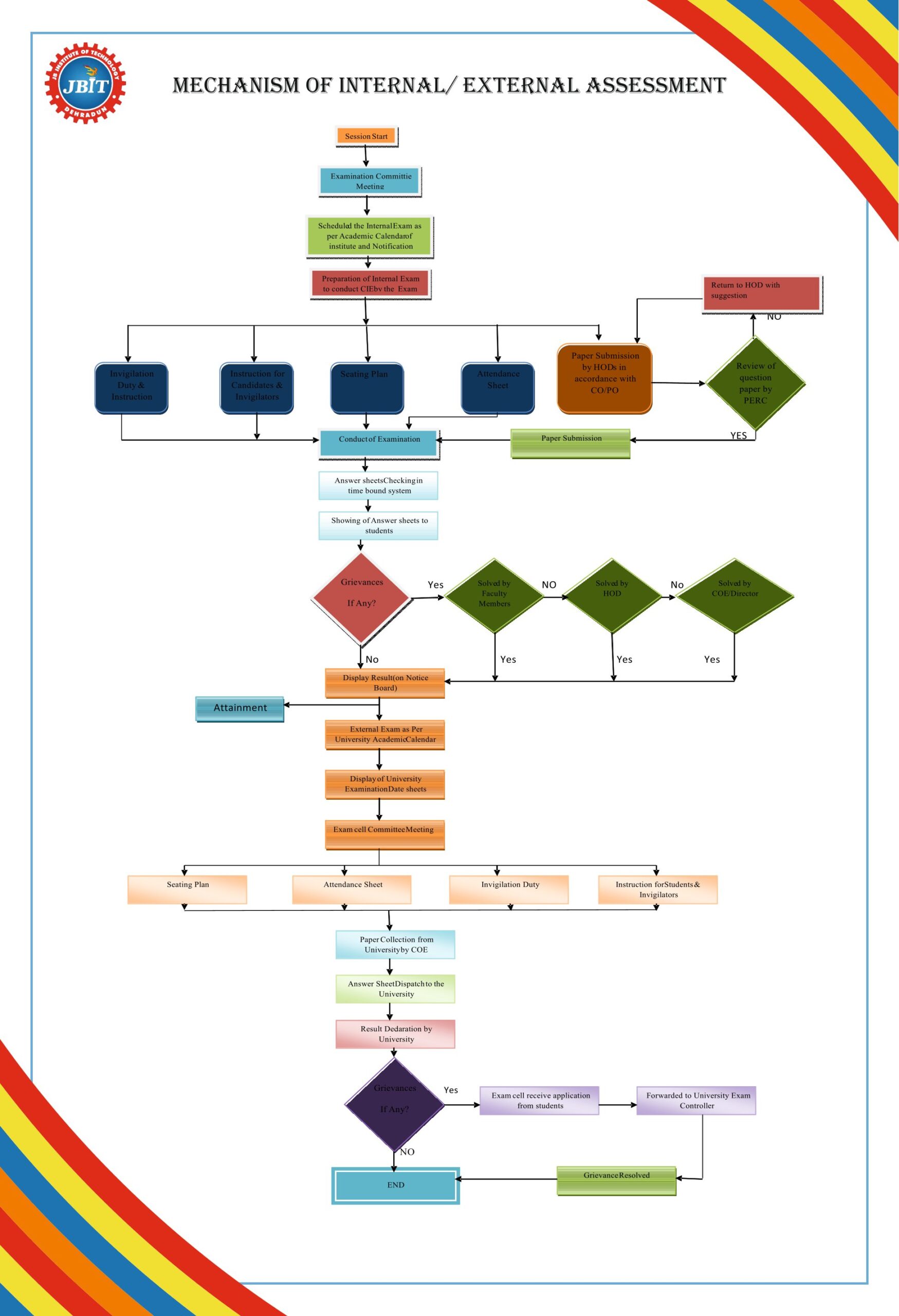
| 2.5.1 | Mechanism of internal assessment is transparent and robust in terms of frequency and mode. Write description within 200 words. | View |
| 2.5.2 | Mechanism to deal with internal examination related grievances is transparent, timebound and efficient | View |
| 2.6.1 | Programme and course outcomes for all Programmes offered by the institution are stated and displayed on website and communicated to teachers and students. | View |
| 2.6.2 | Attainment of Programme outcomes and course outcomes are evaluated by the institution. | View |
| 2.6.3 | Pass percentage of Students during the year | View |
| 2.7.1 | Student Satisfaction Survey (SSS) on overall institutional performance (Institution may design its own questionnaire) (results and details need to be provided as a weblink) | View |
| Metric | Description | Downloads |
|---|---|---|
| 3.1.1 | Grants received from Government and non-governmental agencies for research projects / endowments in the institution during the year (INR in Lakhs) | View |
| 3.1.2 | Number of teachers recognized as research guides (latest completed academic year) | View |
| 3.1.3 | Number of departments having Research projects funded by government and non government agencies during the yea | View |
| 3.2.1 | Institution has created an ecosystem for innovations and has initiatives for creation and transfer of knowledge | VIEW |
| 3.2.2 | Number of workshops/seminars conducted on Research Methodology, Intellectual Property Rights (IPR) and entrepreneurship during the year | View |
| 3.3.1 | Number of Ph.Ds registered per eligible teacher during the year | View |
| 3.3.2 | Number of research papers per teachers in the Journals notified on UGC website during the year | View |
| 3.3.3 | Number of books and chapters in edited volumes/books published and papers published in national/ international conference proceedings per teacher during the year | View |
| 3.4.1 | Extension activities are carried out in the neighborhood community, sensitizing students to social issues, for their holistic development, and impact thereof during the year | VIEW |
| 3.42 | Number of awards and recognitions received for extension activities from government / government recognized bodies during the year | View |
| 3.4.3 | Number of extension and outreach programs conducted by the institution through NSS/NCC/Red cross/YRC etc., ( including the programmes such as Swachh Bharat, AIDS awareness, Gender issues etc. and/or those organized in collaboration with industry, community and NGOs ) during the year | View |
| 3.4.4 | Number of students participating in extension activities at 3.4.3. above during year | View |
| 3.5.1 | Number of Collaborative activities for research, Faculty exchange, Student exchange/ internship during the year | View |
| 3.5.2 | Number of functional MoUs with institutions, other universities, industries, corporate houses etc. during the year | View |
| Metric | Description | Download |
|---|---|---|
| 4.1.1 | The Institution has adequate infrastructure and physical facilities for teaching- learning. viz., classrooms, laboratories, computing equipment etc. | VIEW |
| 4.1.2 | The Institution has adequate facilities for cultural activities, sports, games (indoor, outdoor), gymnasium, yoga centre etc. | VIEW |
| 4.1.3 | Number of classrooms and seminar halls with ICT- enabled facilities such as smart class, LMS, etc. | View |
| 4.1.4 | – Expenditure, excluding salary for infrastructure augmentation during the year (INR in Lakhs) | View |
| 4.2.1 | Library is automated using Integrated Library Management System (ILMS) | VIEW |
| 4.2.2 | The institution has subscription for the following e-resources e-journals eShodhSindhu Shodhganga Membership e-books Databases Remote access toe-resources | View |
| 4.2.3 | Expenditure for purchase of books/e-books and subscription to journals/e- journals during the year (INR in Lakhs) | View |
| 4.2.4 | Number per day usage of library by teachers and students ( foot falls and login data for online access) (Data for the latest completed academic year) | View |
| 4.3.1 | Institution frequently updates its IT facilities including Wi-Fi | VIEW |
| 4.3.2 | Number of Computers | View |
| 4.3.3 | Bandwidth of internet connection in the Institution | View |
| 4.4.1 | Expenditure incurred on maintenance of infrastructure (physical and academic support facilities) excluding salary component during the year (INR in Lakhs) | View |
| 4.4.2 | There are established systems and procedures for maintaining and utilizing physical, academic and support facilities – laboratory, library, sports complex, computers, classrooms etc. | VIEW |
| Metric | Description | Download |
|---|---|---|
| 5.1.1 | Number of students benefited by scholarships and free ships provided by the Government during the year | View |
| 5.1.2 | Number of students benefitted by scholarships, free ships etc. provided by the institution / non- government agencies during the year | View |
| 5.1.3 | Capacity building and skills enhancement initiatives taken by the institution include the following: Soft skills Language and communication skills Life skills (Yoga, physical fitness, health and hygiene) ICT/computing skills | View |
| 5.1.4 | Number of students benefitted by guidance for competitive examinations and career counseling offered by the institution during the year | View |
| 5.1.5 | The Institution has a transparent mechanism for timely redressal of student grievances including sexual harassment and ragging cases Implementation of guidelines of statutory/regulatory bodies Organization wide awareness and undertakings on policies with zero tolerance Mechanisms for submission of online/offline students’ grievances Timely redressal of the grievances through appropriate committees | View |
| 5.2.1 | Number of placement of outgoing students during the year | View |
| 5.2.2 | Number of students progressing to higher education during the year | View |
| 5.2.3 | Number of students qualifying in state/national/ international level examinations during the year (eg: JAM/CLAT/GATE/ GMAT/CAT/GRE/ TOEFL/ Civil Services/State government examinations) | View |
| 5.3.1 | Number of awards/medals for outstanding performance in sports/cultural activities at university/state/national / international level (award for a team event should be counted as one) during the year | View |
| 5.3.2 | Institution facilitates students’ representation and engagement in various administrative, co-curricular and extracurricular activities (student council/ students representation on various bodies as per established processes and norms ) | VIEW |
| 5.3.3 | Number of sports and cultural events/competitions in which students of the Institution participated during the year (organized by the institution/other institutions) | View |
| 5.4.1 | 5.4.1 – There is a registered Alumni Association that contributes significantly to the development of the institution through financial and/or other support services | VIEW |
| 5.4.2 | Alumni contribution during the year (INR in Lakhs) | View |
| Metric | Description | Download |
|---|---|---|
| 6.1.1 | The governance of the institution is reflective of and in tune with the vision and mission of the institution | VIEW |
| 6.1.2 | The effective leadership is visible in various institutional practices such as decentralization and participative management. | VIEW |
| 6.2.1 | The institutional Strategic/ perspective plan is effectively deployed | VIEW |
| 6.2.2 | The functioning of the institutional bodies is effective and efficient as visible from policies, administrative setup, appointment and service rules, procedures, etc. | VIEW |
| 6.2.3 | Implementation of e-governance in areas of operation Administration Finance and Accounts Student Admission and Support Examination | View |
| 6.3.1 | The institution has effective welfare measures for teaching and non- teaching staff | VIEW |
| 6.3.2 | Number of teachers provided with financial support to attend conferences/ workshops and towards membership fee of professional bodies during the year | VIEW |
| 6.3.3 | Number of professional development /administrative training programs organized by the institution for teaching and non-teaching staff during the year | View |
| 6.3.4 | Number of teachers undergoing online/face-to-face Faculty development Programmes (FDP) during the year (Professional Development Programmes, Orientation / Induction Programmes, Refresher Course, Short Term Course etc.) | View |
| 6.3.5 | Institutions Performance Appraisal System for teaching and non- teaching staff | View |
| 6.4.1 | Institution conducts internal and external financial audits regularly Enumerate the various internal and external financial audits carried out during the year with the mechanism for settling audit objections within a maximum of 200 words | VIEW |
| 6.4.2 | Funds / Grants received from non-government bodies, individuals, philanthropers during the year (not covered in Criterion III) | View |
| 6.4.3 | Institutional strategies for mobilization of funds and the optimal utilization of resources | VIEW |
| 6.5.1 | Internal Quality Assurance Cell (IQAC) has contributed significantly for institutionalizing the quality assurance strategies and processes | VIEW |
| 6.5.2 | 6.5.2 – The institution reviews its teaching learning process, structures & methodologies of operations and learning outcomes at periodic intervals through IQAC set up as per norms and recorded the incremental improvement in various activities | VIEW |
| 6.5.3 | Quality assurance initiatives of the institution include: Regular meeting of Internal Quality Assurance Cell (IQAC); Feedback collected, analyzed and used for improvements Collaborative quality initiatives with other institution(s) Participation in NIRF any other quality audit recognized by state, national or international agencies (ISO Certification, NBA) | View |
| Matric | Description | Download |
|---|---|---|
| 7.1.1 | Measures initiated by the Institution for the promotion of gender equity during the year | View |
| 7.1.2 | The Institution has facilities for alternate sources of energy and energy conservation measures Solar energy Biogas plant Wheeling to the Grid Sensorbased energy conservation Use of LED bulbs/ power efficient equipment | View |
| 7.1.3 | Describe the facilities in the Institution for the management of the following types of degradable and non-degradable waste (within 200 words) Solid waste management Liquid waste management Biomedical waste management E-waste management Waste recycling system Hazardous chemicals and radioactive waste management | View |
| 7.1.4 | Water conservation facilities available in the Institution: Rain water harvesting Bore well /Open well recharge Construction of tanks and bunds Waste water recycling Maintenance of water bodies and distribution system in the campus | VIEW |
| 7.1.5 | Green campus initiatives include | View |
| 7.1.6 | Quality audits on environment and energy are regularly undertaken by the institution | View |
| 7.1.7 | The Institution has disabled-friendly, barrier free environment Built environment with ramps/lifts for easy access to classrooms. Disabled-friendly washrooms Signage including | View |
| 7.1.8 | Describe the Institutional efforts/initiatives in providing an inclusive environment i.e., tolerance and harmony towards cultural, regional, linguistic, communal socioeconomic and other diversities (within 200 words). | View |
| 7.1.9 | Sensitization of students and employees of the Institution to the constitutional obligations: values, rights, duties and responsibilities of citizens | View |
| 7.1.10 | The Institution has a prescribed code of conduct for students, teachers, administrators and other staff and conducts periodic programmes in this regard. The Code of Conduct is displayed on the website There is a committee to monitor adherence to the Code of Conduct Institution organizes professional ethics programmes for students, teachers, administrators and other staff 4. Annual awareness programmes on Code of Conduct are organized | View |
| 7.1.11 | Institution celebrates / organizes national and international commemorative days, events and festivals | View |
| 7.2.1 | Describe two best practices successfully implemented by the Institution as per NAAC format provided in the Manual. | View |
| 7.3.1 | Portray the performance of the Institution in one area distinctive to its priority and thrust within 200 words | View |
| 7.3.2 | Plan of action for the next academic year | View |